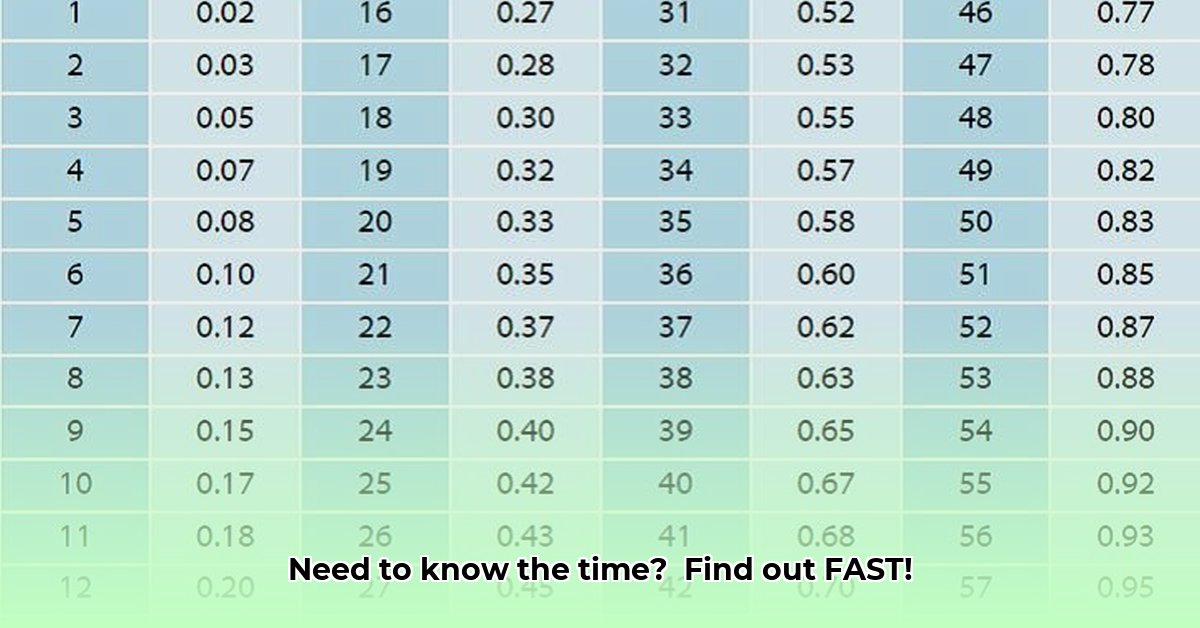
Understanding Your Time Calculation Needs
Figuring out how many minutes until 1:30 PM (or any other time) is surprisingly simple, but the best approach depends on the complexity of your calculation. Do you need a quick estimate for a short break, or are you planning a complex project spanning multiple days and time zones? This guide will help you choose the right tool for the job. For more advanced tools, check out this helpful resource.
Quick Calculations: Simple Online Calculators
For a rapid answer to "how many minutes until 1:30 PM?", a basic online time calculator is the perfect solution. These tools typically require you to input the current time, and they instantly provide the remaining time in minutes. This method is ideal for quick estimations of short time intervals. Think of it as a digital stopwatch for your daily tasks!
Pros: Incredibly fast and easy to use. Perfect for simple, everyday calculations.
Cons: Limited functionality. These calculators usually can't manage dates or account for different time zones. They only work well for calculating time until a specific time on the current day.
Advanced Calculations: Sophisticated Tools for Complex Scenarios
When dealing with deadlines across multiple days or different time zones, a more advanced time calculation tool is a must. These tools allow you to input both start and end times, including dates, and they accurately handle time zone conversions. Understanding the 24-hour (military) time format is essential for preventing errors with these advanced tools.
For example, calculating the time difference between 2:00 PM today and 1:30 AM tomorrow requires a tool that understands both date and time. Basic calculators will fail to provide accurate results in such scenarios.
Pros: Handles dates, time zones, and complex time differences with precision.
Cons: Steeper learning curve than simple calculators; requires familiarity with 24-hour time. Increased complexity increases the potential for user error.
Choosing the Right Tool Based on Your Needs
The optimal method for determining the time until 1:30 PM hinges on the specific application:
- Quick estimations (same day): Use a simple online calculator for instant results.
- Complex calculations (multiple days/time zones): Utilize a more advanced time calculation tool designed for advanced time-zone conversions and date handling.
Remember, accuracy is paramount. Always double-check your input and output to avoid costly mistakes. A miscalculation could impact important schedules or deadlines.
Mastering Time Zones: A Global Perspective
Working across time zones adds another layer of complexity. If you frequently collaborate with international colleagues or plan events spanning different regions, utilizing a tool capable of time zone conversions is critical. Failing to account for time zones can lead to missed deadlines and scheduling conflicts.
Key Considerations for Time Zone Calculations:
- Understanding Daylight Saving Time (DST): Remember to adjust for DST when it is in effect, as it shifts times by an hour, seasonally. Many advanced tools automatically account for DST, removing this source of potential error.
- Accuracy is Key: A small error in time zone calculation can have significant implications, therefore double-check your inputs carefully.
- Choosing the Right Tool: Use simple converters for basic time zone differences or advanced tools with calendar integration and recurring-event scheduling for ongoing management of global schedules.
Using time calculation tools isn't just about determining "how many minutes until 1:30 PM." It's about efficient planning, scheduling, and global collaboration. Mastering these tools helps you work smarter, not harder.
A Step-by-Step Guide to Accurate Time Difference Calculations
Here's a simplified approach for calculating time differences across multiple time zones using an online converter:
- Find a Reliable Converter: Numerous free online tools are available. Prioritize reputable sources to ensure accuracy. (Example: A prominent time zone converter website)
- Input Source and Destination Time Zones: Select your starting and ending time zones.
- Specify the Time: Enter the time you wish to convert.
- Review the Results: The converter displays the equivalent time. Verify the output, considering DST if necessary.
Conclusion: Become a Time Calculation Expert
By selecting the appropriate tool and paying attention to detail, you can master time calculations. Remember to consistently double-check your results, especially in high-stakes situations. With practice and the right tools, accurate time management becomes second nature, ensuring efficiency and preventing costly errors.